
NDIS Services Provider Moreton Bay
A Practical Guide to Discussing Your SIL Needs with Your NDIS Provider

Supported Independent Living (SIL) is designed to help NDIS participants live as independently as possible while receiving the support they need in a shared or individual living arrangement. To get the most from your SIL funding, it is important to have open and productive conversations with your NDIS provider about your goals, preferences, and support requirements. Whether you are seeking SIL services in Narangba or across Moreton Bay, effective communication can help ensure your living arrangement aligns with your needs and aspirations.

Understand Your Current Support Needs

Before meeting with your NDIS provider in Narangba, take some time to assess your daily support requirements. Consider the areas where you need assistance, such as personal care, meal preparation, household tasks, medication management, or community participation.

It can also be helpful to identify situations where you would like to become more independent. Understanding your strengths and challenges will allow you to communicate your needs clearly and help your provider develop a support plan that works for you.

Be Clear About Your Goals

SIL is not only about receiving support. It is also about helping you achieve greater independence and improve your quality of life. Think about the goals you would like to work towards.

These goals might include learning new life skills, becoming more confident with daily tasks, building social connections, or increasing participation in the local community. Sharing these objectives with your provider allows them to tailor supports that align with your NDIS plan and personal aspirations.

Discuss Your Preferred Living Environment

Everyone has different preferences when it comes to where and how they live. During discussions with your provider, explain what is important to you in a living arrangement.

You may have preferences regarding housemates, location, accessibility features, privacy, daily routines, or household responsibilities. Participants living in Narangba and Moreton Bay often benefit from choosing accommodation that provides convenient access to community facilities, transport, and local activities. Being open about your preferences can help create a comfortable and supportive living environment.

Ask Questions About Available Supports

A productive conversation should involve asking questions as well as sharing information. Ask your NDIS Services provider in Moreton Bay to explain the supports available through their SIL service and how they can assist you in achieving your goals.

Some useful questions may include:

  • What daily supports are provided?
  • How are support workers matched with participants?
  • How are emergencies handled?
  • What opportunities are available for skill development?
  • How is participant feedback managed?

Having a clear understanding of available supports can help you make informed decisions about your care and accommodation.

Involve Family Members or Advocates

If you feel more comfortable having support during discussions, consider inviting a family member, friend, support coordinator, or advocate to attend meetings with you.

They can help you remember important details, ask additional questions, and ensure your preferences are fully understood. Having another perspective can also be valuable when evaluating different SIL options.

Review and Update Your Support Plan Regularly

Your support needs may change over time as you gain new skills, experience life changes, or set new goals. Regular reviews with your NDIS provider help ensure your SIL supports continue to meet your evolving requirements.

Be honest about what is working well and where improvements may be needed. Ongoing communication allows your provider to adjust supports and continue helping you achieve greater independence.

Build a Positive Partnership

A successful SIL arrangement is built on trust, respect, and collaboration. Open communication helps establish a positive relationship with your provider and ensures your voice remains at the centre of decision-making.

When both you and your provider work together toward common goals, it becomes easier to create a living environment that supports independence, wellbeing, and personal growth.

Conclusion

Discussing your SIL requirements with your NDIS provider is an important step towards creating a supportive and empowering living arrangement. By understanding your needs, setting clear goals, asking questions, and maintaining regular communication, you can ensure your SIL supports align with your lifestyle and aspirations. For participants across Narangba and Moreton Bay, these conversations can lay the foundation for greater independence and a more fulfilling future.

Get the Guidance You Need

If you wish to discuss your SIL requirements with Beneficence Care Support Services and receive appropriate guidance, call 1800 945 300 or send an email your details at ndis@beneficencecare.com.au so we can connect with you.

FAQ's About Discussing Your SIL Needs with Your NDIS Provider

  • You should discuss your daily support needs, personal goals, preferred living arrangements, skill development objectives, and any specific requirements that will help you live more independently.
  • Make a list of your current support needs, challenges, future goals, preferred accommodation features, and any questions you would like to ask your provider.
  • While availability and funding considerations apply, participants can discuss their location preferences, accessibility requirements, and living arrangements with their NDIS provider.
  • SIL may include assistance with personal care, household tasks, meal preparation, medication management, community participation, and developing everyday living skills.
  • Yes. SIL supports should be reviewed regularly and can be adjusted to reflect changes in your circumstances, goals, or level of independence.
  • Yes. Family members, support coordinators, advocates, or trusted friends can help you communicate your preferences, ask questions, and make informed decisions.
  • Consider factors such as their experience, communication style, support approach, accommodation options, staff qualifications, and willingness to involve you in decision-making.
  • You can ask about staffing arrangements, participant support plans, emergency procedures, skill-building opportunities, house rules, and how feedback or concerns are managed.
  • Yes. A key goal of SIL is to support participants in developing life skills, building confidence, and increasing independence while maintaining appropriate levels of support.
  • It is beneficial to review your SIL supports regularly, particularly after major life changes, new goals, or changes to your NDIS plan, to ensure your supports remain suitable and effective.
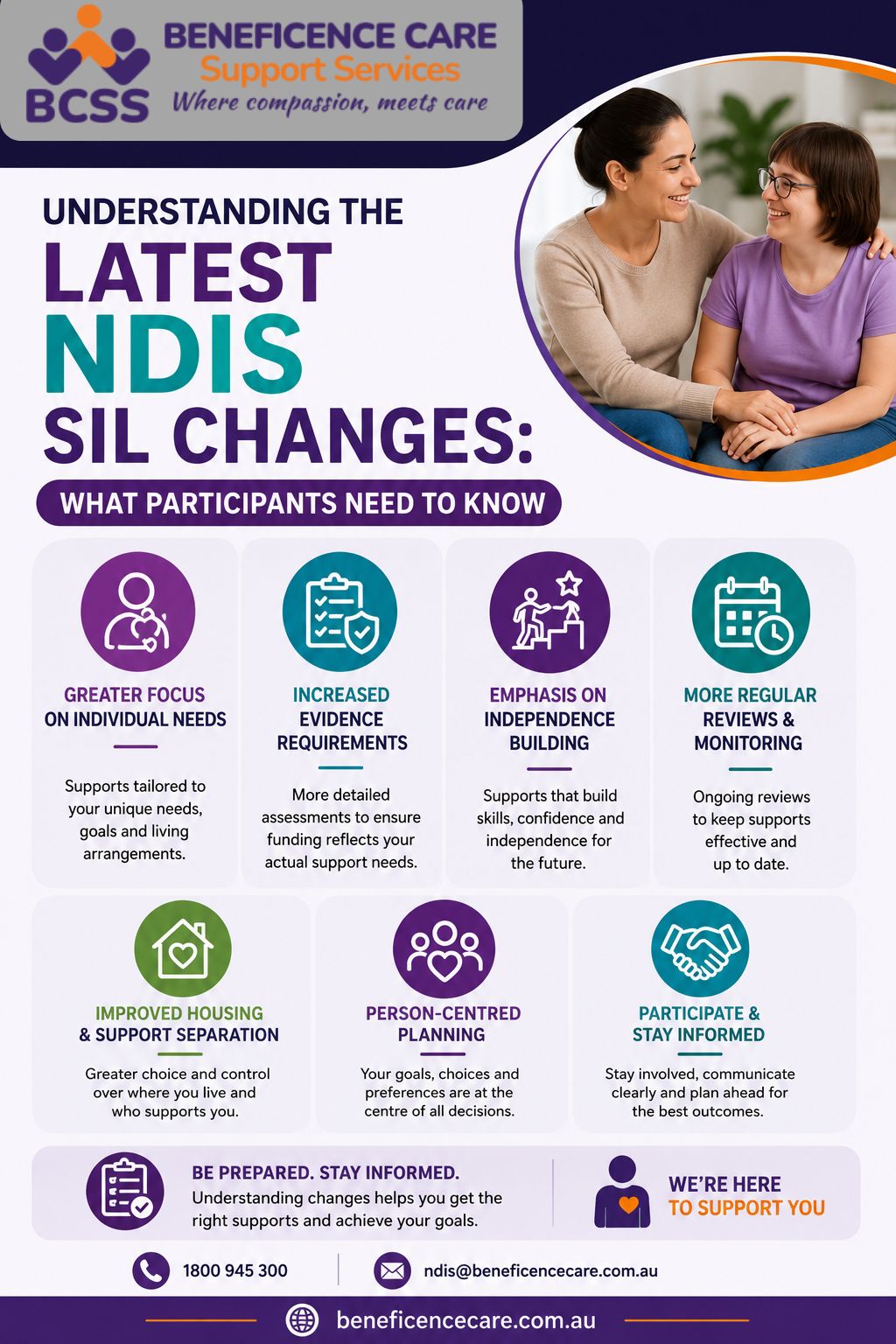
Understanding the Latest NDIS SIL Changes: What Participants Need to Know

Supported Independent Living (SIL) continues to play a vital role in helping NDIS participants live as independently as possible while receiving the support they need. As the NDIS evolves, changes to funding, assessments, and service delivery can impact how participants access and manage SIL supports. Staying informed about these updates is essential for participants, families, and carers in North Lakes, Redcliffe, and surrounding communities.

Here is an overview of some important SIL-related changes and considerations that participants should be aware of.

  • Greater Focus on Individual Needs

Recent NDIS reforms have placed a stronger emphasis on ensuring supports are tailored to each participant’s individual circumstances. Rather than applying a one-size-fits-all approach, the NDIS aims to better align funding with a person’s specific support requirements, goals, and living arrangements.

For participants, this means there may be greater scrutiny of the support they require throughout the day and overnight. Participants and SIL providers in North Lakes may need to demonstrate how support arrangements help achieve independence, safety, and quality of life outcomes.

  • Increased Evidence Requirements

One of the most noticeable changes involves the level of evidence required when requesting or reviewing SIL funding. Participants may be asked to provide more detailed information about their daily support needs and functional capacity.

This evidence often comes from allied health professionals, support coordinators, carers, and SIL providers. Comprehensive assessments and reports can help demonstrate why certain levels of support are necessary and ensure funding decisions accurately reflect individual needs.

  • Stronger Emphasis on Independence Building

The NDIS continues to encourage supports that build participants’ skills and independence. SIL services are increasingly expected to help participants develop practical life skills rather than simply providing ongoing assistance.

This may include support with cooking, cleaning, budgeting, personal care, social participation, and decision-making. Providers in North Lakes and Redcliffe are placing greater focus on helping participants achieve long-term goals and maximise their independence wherever possible.

  • More Regular Reviews and Monitoring

Participants receiving SIL funding may experience more frequent reviews of their support arrangements. These reviews help ensure supports remain appropriate and continue to provide value while meeting participants’ changing needs.

During a review, the NDIS may examine how current supports are working, whether goals are being achieved, and if adjustments are required. Maintaining clear records and ongoing communication with your provider can make the review process smoother and more effective.

  • Improved Housing and Support Separation

The NDIS continues to support the principle of separating housing and support services where possible. This approach provides participants with greater choice and control over where they live and who delivers their support.

For participants, this can create more flexibility when selecting accommodation and SIL support providers in Redcliffe. It also promotes participant rights and encourages service quality through greater competition and accountability.

  • The Importance of Person-Centred Planning

As SIL arrangements continue to evolve, person-centred planning remains a key focus. Participants are encouraged to play an active role in decisions about their supports, daily routines, living arrangements, and future goals.

Providers are expected to listen to participant preferences and ensure support plans reflect individual aspirations. This collaborative approach helps create more meaningful and effective outcomes.

  • How Participants Can Prepare

Understanding SIL changes can help participants navigate the NDIS with greater confidence. To stay prepared:

  • Keep assessments and supporting documentation up to date.
  • Maintain regular contact with your provider and support coordinator.
  • Clearly communicate any changes in your support needs.
  • Review your goals regularly.
  • Participate actively in planning and review meetings.

Taking a proactive approach can help ensure your supports continue to align with your circumstances and future aspirations.

Final Words

NDIS SIL arrangements continue to evolve as the scheme focuses on improving participant outcomes, independence, and accountability. While changes may involve additional assessments and reviews, they also create opportunities for more personalised and effective support. For participants in North Lakes and Redcliffe, staying informed and actively engaging with providers can help ensure SIL services continue to support a safe, fulfilling, and independent lifestyle.

SIL Supports Tailored for You

If you wish to discuss your SIL requirements with Beneficence Care Support Services and receive appropriate guidance, call 1800945300 or send an email your details at ndis@beneficencecare.com.au so we can get in touch with you.

FAQs About Understanding the Latest NDIS SIL Changes: What Participants Need to Know

  • Recent changes focus on stronger evidence requirements, person-centred planning, regular funding reviews, and a greater emphasis on building participant independence and life skills.
  • The NDIS aims to ensure funding accurately reflects each participant's support needs. Detailed assessments and reports help demonstrate the level of support required for daily living and safety.
  • Existing participants may experience more frequent reviews or requests for updated documentation, but the goal is to ensure supports remain appropriate and aligned with their needs.
  • Evidence may include reports from occupational therapists, psychologists, support coordinators, medical professionals, carers, and SIL providers outlining daily support requirements.
  • Review timeframes vary depending on individual circumstances and plan durations. Participants should be prepared for periodic reviews to assess whether current supports remain suitable.
  • No. SIL funding can support a range of daily living activities, including household tasks, meal preparation, medication assistance, skill development, and community participation.
  • The NDIS encourages providers to help participants develop practical skills that increase self-reliance, such as budgeting, cooking, cleaning, personal care, and decision-making.
  • In many situations, yes. The NDIS supports greater separation between housing and support services to provide participants with more choice and control.
  • Keep your assessments current, document changes in your support needs, maintain communication with your provider, and actively participate in planning meetings.
  • Inform your SIL provider, support coordinator, or NDIS representative as soon as possible. Updated assessments and documentation may be required to reflect your new circumstances and support requirements.
Social and Community Access Scarborough
What is the Importance of Social and Community Access?

In today’s world, social and community access Redcliffe plays a crucial role in fostering inclusion, well-being, and engagement among individuals, particularly in suburban and regional areas. For residents, social and community access provides opportunities for connection, support, and personal growth. This access helps build a cohesive society where people can participate fully in cultural, social, and community activities that promote a sense of belonging.

Read more

Discover the Life-Changing Benefits of Disability Support Services

When you or a loved one are living with a disability, finding reliable and compassionate disability support services Caboolture or Redcliffe can make all the difference. Whether you’re looking for personal care, community participation, or home modifications, choosing the right NDIS services provider can empower you to live more independently and enjoy a better quality of life.

Read more

Ready to Transform Your Life with the Best NDIS Support? Important Things to Know

Finding the right NDIS provider can be life-changing, but only if you choose wisely. If you’ve been searching for NDIS services provider North Lakes or Moreton Bay, you’re already on the right path toward better support, independence, and peace of mind.

Let’s break it down in a simple, engaging way so you can confidently take your next step.

Read more

In-home Support Caboolture
Why In-Home Support is a Game Changer? Read to Know

Finding the right support at home can make a world of difference in maintaining independence, comfort, and quality of life. If you or your loved one needs in-home support Caboolture or Murrumba Downs, understanding your options is the first step toward better care and peace of mind.

Next, let’s explore what to expect when seeking in-home support, so you can make informed choices about your care.

Read more

Call Now Contact Now

Accessibility Toolbar